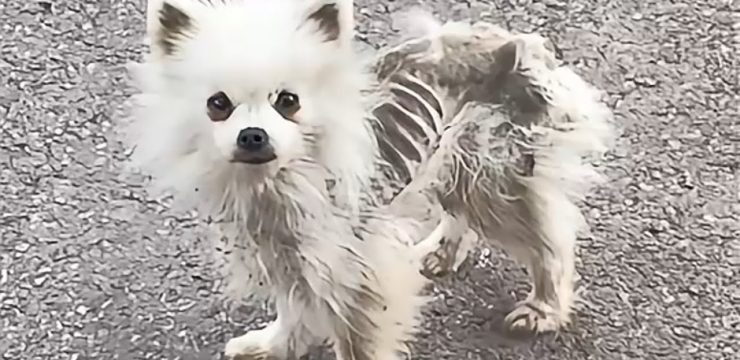
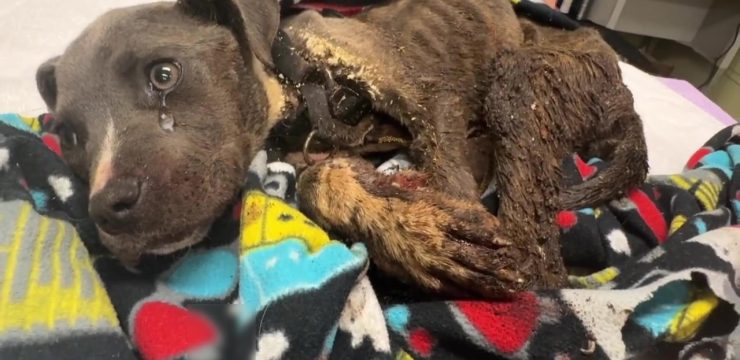
Matty’s story begins in a place no living creature should ever have to endure. He was a stray dog, thin and desperate, wandering the streets in search of scraps to survive. Hunger had driven him into harm’s way, and what followed nearly cost him his life. Instead of kindness, he was met with cruelty. Stones were thrown at him while he searched for food, leaving him broken, terrified, and fighting to hold on.
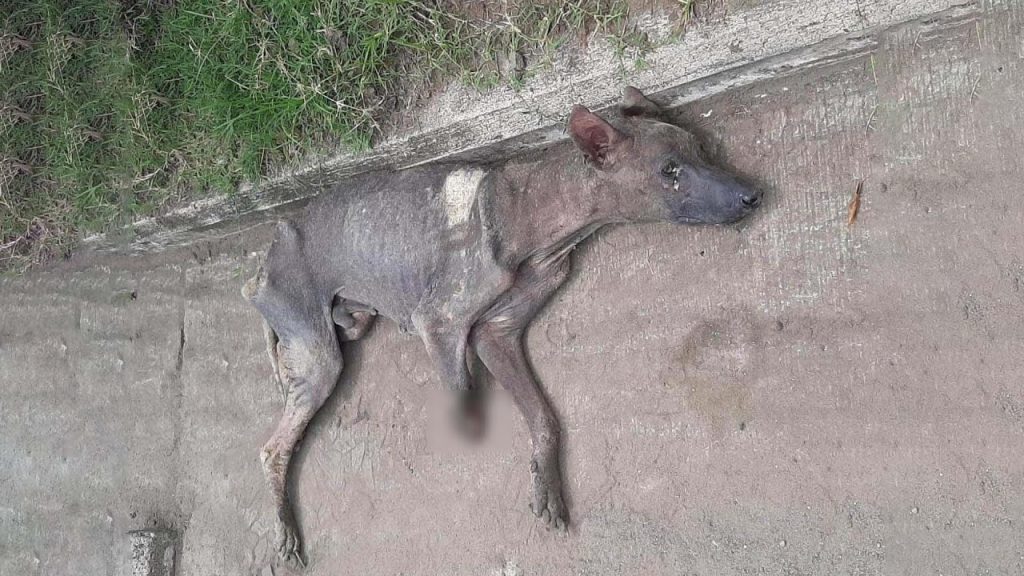
When rescuers finally found him, Matty was in devastating condition. His small body bore the marks of neglect and violence. One of his front legs was so severely damaged it could not be saved. A deep wound cut across his neck, raw and painful. His skin was inflamed and infected, the result of advanced disease left untreated for far too long. He was weak, exhausted, and understandably afraid. Years of hardship had taught him that human hands could hurt.
At first, Matty reacted with fear and defensiveness. He growled and pulled away, unable to trust the very people trying to help him. For many older viewers who have loved and lost pets over the years, this reaction is heartbreaking but familiar. Trauma leaves scars that run deeper than flesh. His eyes held both pain and confusion, as though he could not understand why the world had treated him so harshly.
The medical team quickly realized that saving Matty would not be simple. His injured front leg required amputation to prevent further infection and suffering. However, his body was in such fragile condition that surgery was too risky at the outset. Blood tests revealed dangerously low counts, meaning he did not have the strength to survive a major procedure. The rescue team had to wait.
Those weeks were critical. Instead of rushing into surgery, they focused on stabilizing him. Antibiotics were administered carefully to fight infection. Vitamins were introduced to support his immune system. Most importantly, he was given a nourishing, high-calorie diet to rebuild what starvation had taken from him. To everyone’s relief, Matty ate eagerly. Each meal was a small victory, a sign that somewhere inside, he still wanted to live.
Gradually, his physical condition began to improve. His eyes grew clearer. His body gained strength. The wounds that once looked so frightening started to heal under attentive care. But perhaps the most touching change was not physical at all. One day, after weeks of patience and gentle handling, his tail gave the slightest wag. It was hesitant, almost unsure of itself, but it was there. That single movement carried enormous meaning. It signaled the beginning of trust.
Trust is not rebuilt overnight. It takes consistency, safety, and compassion. The rescue team understood this well. They spoke softly around him. They moved slowly. They allowed him to set the pace. For viewers in their fifties and beyond, who have lived long enough to know that healing often takes time, this part of Matty’s journey resonates deeply. True recovery is rarely dramatic. It is built one quiet moment at a time.
Eventually, the day came when Matty was strong enough for surgery. His blood levels had stabilized, and his body could finally handle the procedure that would change his future. The amputation was performed carefully, removing the damaged limb that had caused him so much pain. Though it may sound drastic, this surgery was an act of mercy, freeing him from constant suffering.
What happened next surprised even seasoned rescuers. Instead of withdrawing, Matty seemed lighter. Once he recovered from anesthesia and the surgical soreness began to fade, he adapted with remarkable resilience. Dogs possess an extraordinary ability to adjust, and Matty was no exception. Within a short time, he was learning how to balance and walk on three legs.
Soon, he was not just walking, but exploring. Sunlight became something he sought out, stretching his small body in its warmth. He began interacting with other dogs, cautiously at first, then with growing confidence. The once-frightened stray transformed into what many affectionately call a “tripod” dog—proof that losing a limb does not mean losing joy.
His personality blossomed. The defensive growls disappeared, replaced by gentle affection. He welcomed soft pets and leaned into human touch. He discovered play again, something that likely had been absent from his life for a long time. Watching him romp in the yard, one would never guess the depth of suffering he once endured.
For those who have followed stories of rescue over the years, Matty’s transformation serves as a powerful reminder of what compassion can accomplish. He did not simply survive; he reclaimed his life. The dog who once searched for scraps under threat of harm now stands as a testament to resilience and second chances.
As his recovery reached its final stages, it became clear that Matty was ready for the next chapter. Healthy, alert, and full of gentle energy, he was prepared to leave behind the shadows of his past. The goal was no longer just survival, but belonging. A loving forever home awaited him—one where meals would be regular, hands would be kind, and safety would be constant.
Matty’s journey is not just about one dog. It reflects the difference that patience and mercy can make in a wounded world. His story invites us to consider how small acts of care ripple outward, changing lives in ways we may never fully see. In the end, what began in cruelty concluded in hope. And for Matty, hope made all the difference.