High above the ground on the sixth floor of an unfinished construction site, a fragile mother dog stood trembling against the bitter cold. Her once-soft coat was stiff with dried cement, clinging to her thin frame and outlining every rib. The wind cut through the exposed concrete structure, offering no shelter from the freezing air. Yet despite her exhaustion and fear, she refused to leave the tiny corner she had claimed as home. Curled close beside her were three newborn puppies, so small and helpless they could barely lift their heads. Every instinct in her body told her to protect them, no matter the cost.
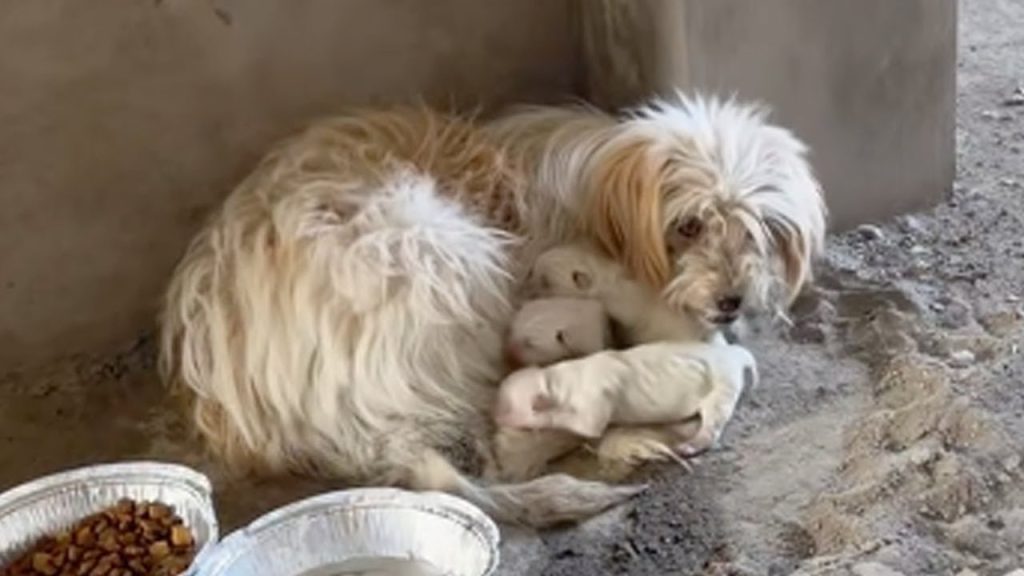
When rescuers first discovered her, she was understandably wary. Her dark eyes followed every movement from a distance, cautious and guarded. She positioned herself between her babies and anyone who approached, her posture tense but not aggressive—simply protective. It was clear she had survived by relying on her own instincts for a long time. Trust would not come easily.
Understanding her fear, the rescue team chose patience over pressure. They began by leaving food several feet away, backing up to give her space. Hunger eventually overcame hesitation, and she cautiously stepped forward to eat while never taking her eyes off the strangers. Day after day, the team returned with nourishing meals, speaking softly and moving slowly so as not to frighten her. Their consistency became the first bridge between uncertainty and trust.
The conditions on the construction floor were harsh. Cold concrete offered no warmth for fragile newborns, and nighttime temperatures dropped dangerously low. Realizing the urgency, the rescuers built a simple insulated shelter using styrofoam boxes and thick blankets. It wasn’t elaborate, but it created a barrier against the wind and trapped precious warmth inside. Carefully, without forcing contact, they positioned the shelter near the mother and her puppies. After cautious inspection, she guided her babies inside.
Those first small victories mattered. Each meal she accepted, each step she took closer to the volunteers, signaled progress. Over two weeks, a quiet transformation unfolded. The mother dog began to recognize the familiar faces who brought food and safety. Her posture softened. Instead of retreating at their approach, she waited. Eventually, she allowed gentle proximity. The moment she chose to follow them down from the sixth floor marked a turning point not just in her rescue, but in her life.
Transporting her and the puppies to a warm indoor foster home required careful planning. The team moved slowly to keep her calm, speaking in reassuring tones. Once inside a heated, secure environment, the difference was immediate. No more icy winds. No more bare concrete. Clean bedding replaced rough debris. Nutritious food was available regularly. For the first time in what must have felt like forever, she could rest without bracing herself against danger.
Under consistent care, the puppies began to thrive. In the early days, they had been tiny, fragile bundles barely able to crawl. Now, with warmth and nourishment, they gained strength daily. Their eyes brightened. Their small tails wagged in uncertain, joyful motions. Before long, they bounced clumsily across the floor, playful and curious. The rescuers affectionately described them as “moving cotton balls,” energetic and full of life. Watching them grow was a reminder of how quickly hope can take root when given the right conditions.
At around seventy days old, the change was remarkable. Each puppy weighed approximately 3.5 kilograms, sturdy and healthy. Their once-delicate frames were now strong and balanced. They wrestled with one another, explored every corner of their foster space, and responded eagerly to gentle human interaction. The transformation wasn’t sudden or dramatic—it was steady, built on daily acts of care and commitment.
The mother dog’s evolution was just as moving. The tense, cement-covered figure who once trembled on cold concrete gradually gave way to a relaxed, affectionate companion. With regular meals and a safe environment, her body regained healthy weight. Her coat, once stiff and dusty, became softer and cleaner. But perhaps the most profound change was in her spirit. She no longer flinched at every movement. She sought attention. She wagged her tail freely. She allowed herself to enjoy sunshine streaming through windows and later, supervised time outdoors.
Seeing her play gently with her thriving puppies in the warmth of daylight was a powerful contrast to those first bleak days high above the ground. She ran across safe grass instead of pacing exposed concrete. She watched her little ones explore without fear of icy winds. For the first time, her energy was not consumed by survival but by simple joy.
Rescue stories like this one remind us that transformation rarely happens overnight. It grows from patience, consistency, and compassion. The team never forced her trust; they earned it. They never rushed her progress; they respected her pace. In return, a once-frightened mother found safety, and three vulnerable newborns were given the chance to grow into healthy, independent young dogs.
For many who follow rescue efforts, especially those who understand the quiet strength of motherhood and devotion, this story resonates deeply. It speaks to the universal instinct to protect our young and the profound difference steady kindness can make. The image of a trembling, cement-covered dog on a freezing construction floor is difficult to forget. But even more unforgettable is the sight of that same mother basking in sunlight, her healthy puppies playing nearby.
In a world that can often feel uncertain, stories of resilience and compassion offer steady reassurance. They remind us that while hardship exists, so does extraordinary patience and care. And sometimes, all it takes to change a life is showing up—day after day—until trust finally replaces fear.