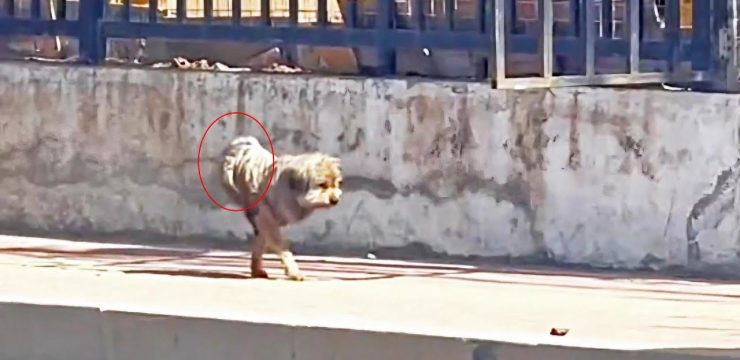
Few things are more powerful than witnessing a fragile life fight its way back to strength. Izyum’s journey is one of those rare stories that reminds us what resilience truly looks like—not the loud, dramatic kind, but the quiet determination that unfolds day after day, step by careful step.
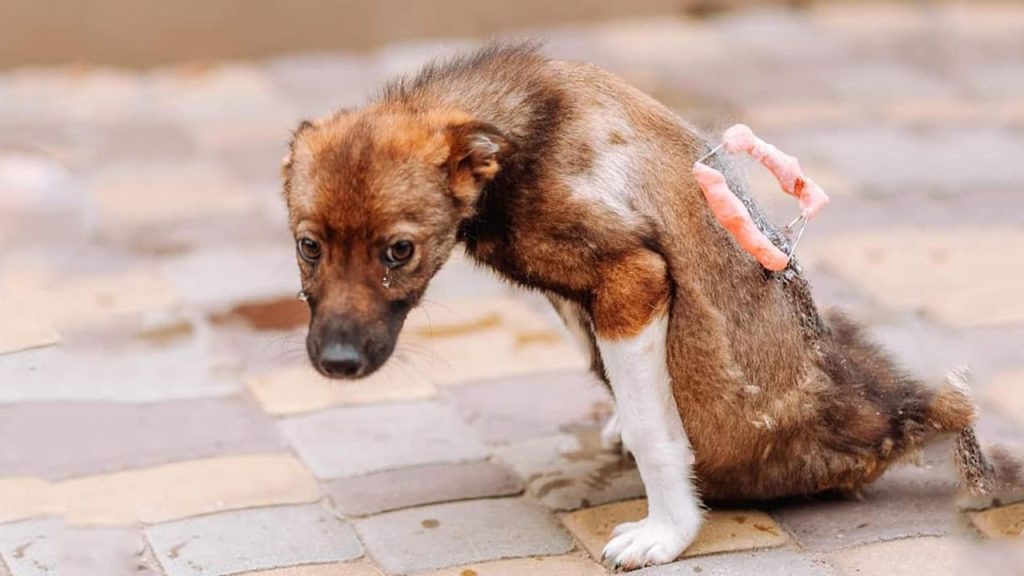
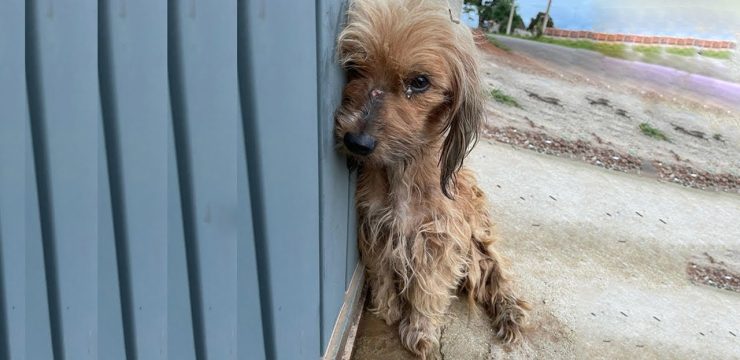
Izyum is a small dog who survived a traumatic past. When he was first brought into care, the damage he carried was not only emotional but physical. His hind legs no longer supported him the way they should. Standing was a struggle. Moving across a room required enormous effort. For any animal, that loss of mobility can feel overwhelming. For a dog as small as Izyum, it was life-altering.
Yet what followed was not surrender. It was rehabilitation—steady, structured, and rooted in both medical expertise and daily compassion.
One of the most moving parts of his recovery has taken place in the water. During hydrotherapy sessions, something remarkable happens. In the gentle support of the pool, Izyum’s hind legs begin to move independently. They push and extend with surprising strength. The very limbs that seemed so limited on land show real coordination when buoyed by water. Watching him swim is not just a therapeutic exercise; it is proof of potential. Each stroke demonstrates that his body remembers how to move, how to try, how to hope.
Hydrotherapy offers more than physical conditioning. The water reduces strain on joints and muscles while encouraging natural motion. For Izyum, it became a space of possibility. Instead of dragging himself forward, he propels himself. Instead of hesitating, he experiments with movement. These sessions revealed that a full recovery was not an impossible dream but a realistic goal.
Outside the pool, the rehabilitation process continues with equal dedication. Skilled hands work patiently over his small frame through professional massage therapy. These treatments stimulate circulation, relax tight muscles, and gently awaken areas that had grown weak from disuse. Every careful touch is designed to rebuild strength without causing strain.
In addition to massage, specialized taping techniques are applied to his joints. The tape provides subtle support and encourages proper alignment when he attempts to stand. It helps improve posture and stability, allowing him to bear weight more confidently. These techniques may appear simple, but they are grounded in careful planning and clinical knowledge. For a dog relearning how to stand, even a small adjustment can make a meaningful difference.
Rehabilitation is never purely physical. Emotional recovery walks hand in hand with bodily healing. In the beginning, Izyum carried visible fear. His posture was cautious. His eyes held uncertainty. Trauma leaves its mark quietly, often long after the immediate danger has passed.
But within that cautious exterior, his true personality was still alive.
As days turned into weeks, small glimpses of his spirit began to shine through. The shy dog who once hesitated began showing flashes of playfulness. One unforgettable moment captured his mischievous side perfectly: he managed to “steal” an entire bucket of food when his caretakers weren’t looking. It was not just a humorous incident—it was a milestone. It showed curiosity. It showed confidence. It showed that beneath the therapy routines and careful monitoring, Izyum was rediscovering joy.
Moments like that matter more than we sometimes realize. They tell us that healing is taking place on multiple levels. A playful act signals trust. It signals comfort. It signals that a dog once defined by fear is beginning to feel safe enough to be himself again.
The transformation has not been instant. There have been slow days and challenging ones. Recovery demands consistency—daily exercises, repeated efforts, and a willingness to celebrate even the smallest improvements. A few extra seconds of standing. A slightly steadier posture. A step taken with less hesitation.
Over time, those small victories accumulate.
Where there were once tears of pain, there are now tears of happiness. That change did not come from a single breakthrough. It came from steady medical care combined with unwavering love. Each therapy session, each gentle word, each reassuring touch played a role in rewriting Izyum’s story.
Today, as he learns to stand and move on his own again, the meaning of resilience feels tangible. His hind legs grow stronger. His balance improves. He experiments with movement in ways that once seemed out of reach. The fear that once defined his expression softens into curiosity and trust.
For many of us, especially those who have lived long enough to understand hardship, stories like Izyum’s resonate deeply. They remind us that recovery rarely happens in dramatic leaps. It unfolds quietly. It requires patience. It requires people—and sometimes entire teams—who refuse to give up.
Izyum’s journey stands as a testament to what can happen when professional rehabilitation meets daily compassion. It proves that even after trauma, the body and spirit can find their way back toward strength. His story is not just about learning to walk again. It is about reclaiming dignity, rediscovering playfulness, and transforming suffering into hope.
In the end, what shines brightest is not only his physical progress but his renewed spirit. A small dog who once struggled simply to stand is now moving toward a future filled with possibility. That is the quiet miracle of rehabilitation—and the enduring power of love.