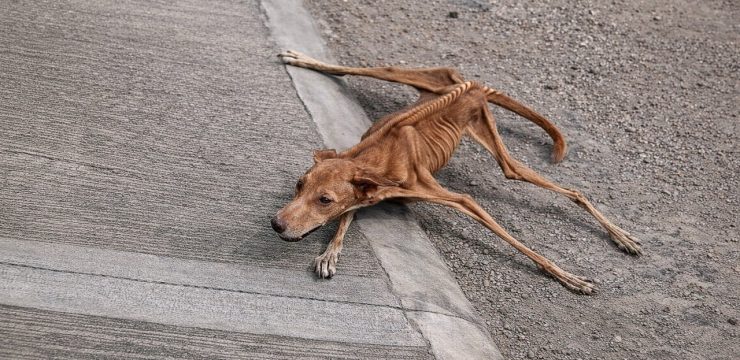
Reya’s story is one that lingers in the heart long after you hear it. For six long years, she lived her life at the end of a heavy chain. Day after day, season after season, she remained confined to the same small space, exposed to the elements and deprived of the most basic care. Reports revealed that she was fed only three times a month. For any living being, that kind of neglect is almost unimaginable.

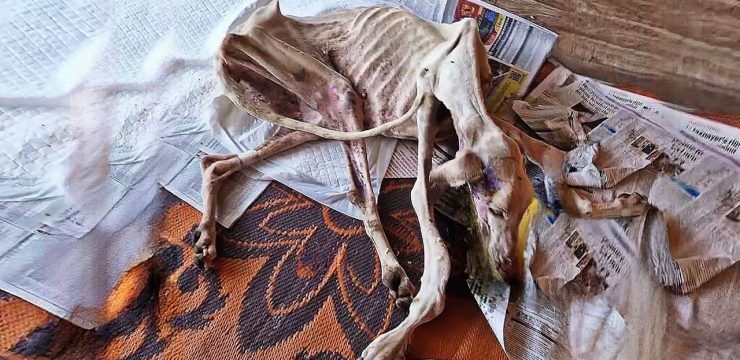
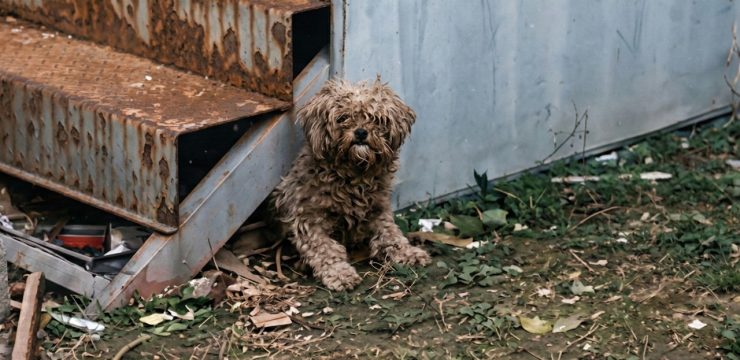
When rescuers finally arrived, what they found was deeply distressing. Reya’s body was painfully thin. Her ribs pressed sharply against her fragile skin, a visible testament to prolonged malnutrition. She stood there weak and exhausted, her spirit dimmed by years of isolation and hunger. It was clear that her survival had hung by a thread for far too long.
The rescue team understood immediately that time was critical. Every minute mattered. They approached her slowly and gently, aware that a dog who has endured such hardship often fears the very hands that try to help. Their movements were careful, their voices soft and reassuring. They knew that compassion, not force, would be the key to reaching her.
At first, Reya’s eyes reflected uncertainty and fear. After years of neglect, human touch had become something unfamiliar and frightening. Yet the rescuers did not rush her. They offered small pieces of nutritious food, including tender chicken breast, hoping to provide her body with much-needed strength. More importantly, they offered patience. They knelt beside her without expectation, allowing her to take the first small steps toward trust.
It was not an instant transformation. Trauma leaves invisible wounds, and those wounds take time to heal. Reya flinched at sudden movements. She hesitated when hands reached toward her. But something remarkable began to unfold. With each gentle word and each careful gesture, her rigid posture softened. Her eyes, once clouded with fear, began to show flickers of curiosity and cautious hope.
The heavy chain that had defined her existence for six years was finally removed. That simple act carried enormous meaning. It was more than the removal of metal links; it was the breaking of a long chapter of suffering. For the first time in years, Reya was free from the physical restraint that had limited her world to a few unforgiving feet of ground.
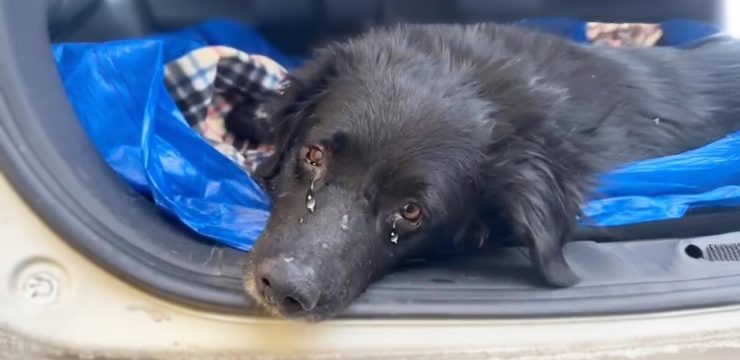
She was then transported to a veterinary clinic, where professional care could address the damage caused by prolonged neglect. Malnutrition affects every part of the body. Muscles weaken, immune systems falter, and internal organs struggle to function properly. The veterinary team examined her carefully, committed to giving her the medical attention she so desperately needed.
For those who have loved a dog, it is impossible not to feel the weight of Reya’s experience. Dogs are loyal, affectionate creatures who depend entirely on human stewardship. When that trust is broken, the consequences are profound. Yet Reya’s story is not only about suffering. It is about resilience. Despite everything she endured, she still had the capacity to respond to kindness.
Slowly, nourishment began to restore her strength. Regular meals replaced the long stretches of hunger she had known for years. Gentle touch replaced isolation. Warm shelter replaced exposure. Each small improvement was a quiet victory. Each tail movement, each moment of relaxed breathing, signaled that healing was underway.
For many viewers, especially those who have shared their homes and hearts with dogs over decades, Reya’s journey resonates on a deeply personal level. It reminds us of the responsibility we carry when we welcome an animal into our lives. A dog is not a temporary convenience or a passing interest. A dog is a lifelong commitment, deserving of care, consistency, and love.
What stands out most in Reya’s rescue is the unwavering compassion of the team who refused to look away. They saw not just a skeletal figure bound by chains, but a life worth saving. Their urgency was matched by tenderness. They recognized that while food would heal her body, patience and kindness would heal her spirit.
The end of her confinement marked the beginning of something entirely different. No more chains. No more irregular scraps of food. No more lonely nights bound to one spot. Instead, Reya entered a chapter filled with warmth, structured care, and the possibility of belonging. For the first time in over half a decade, she could experience what every dog deserves: safety, nourishment, and love.
Stories like Reya’s challenge us to reflect. They urge us to advocate for responsible pet ownership and to support rescue efforts in our own communities. They remind us that even after years of hardship, hope can still take root. Healing is rarely immediate, but with dedication and compassion, it is possible.
Reya’s rescue did not erase the six years she spent in chains. Those years will always be part of her history. But they no longer define her future. What defines her now is the moment someone chose to intervene, to care, and to act with urgency and empathy.
In the end, her story stands as both a warning and a promise. It warns us of the consequences of neglect, but it also promises that with kindness and determination, lives can be transformed. Reya’s suffering has ended. Ahead of her lies a life filled with regular meals, gentle hands, and the steady reassurance that she will never again be forgotten.