Elijah’s story begins in a place no living creature should ever have to endure. He was discovered alone on the streets, discarded and barely clinging to life after being used as a “bait dog” in cruel fighting operations. When rescuers first laid eyes on him, his fragile body told a story of prolonged suffering. Thousands of maggots covered his wounds, and his ears had been severely mutilated. He was weak, silent, and dangerously close to slipping away.
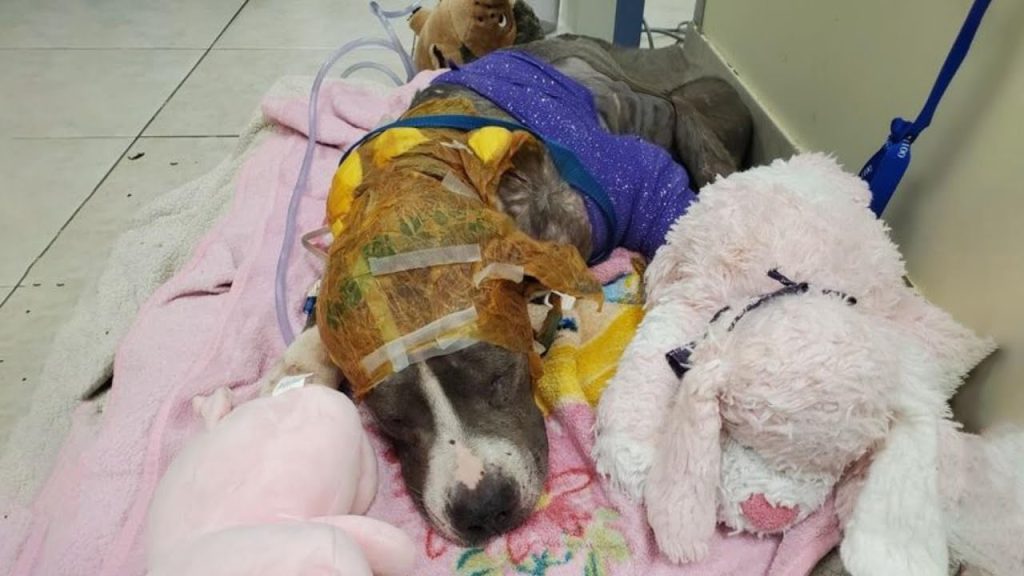
Despite the overwhelming condition he was found in, there was no hesitation. Elijah was rushed straight into emergency surgery. Veterinarians worked with urgency and focus, knowing every minute mattered. For more than four hours, medical staff carefully cleaned his infected wounds, removing layers of dead tissue and fighting to control the damage that had spread throughout his body. Some injuries were too severe to repair, and necessary amputations were performed to save his life. It was a race against infection, dehydration, and shock.
The days that followed were uncertain. Elijah’s recovery would not be quick or simple. He underwent multiple additional procedures to remove remaining damaged tissue and prevent further complications. His tiny body required feeding tubes to ensure he received nutrition while he was too weak to eat on his own. Bandages covered much of his frame, and they had to be changed constantly to keep infection at bay. Every movement caused discomfort. Every small improvement felt monumental.
Caring for a dog in such critical condition demands more than medical skill. It requires patience, vigilance, and compassion. Veterinary staff and caregivers monitored him around the clock. They adjusted medications, cleaned wounds, and spoke softly to him even when he seemed too tired to respond. In cases like Elijah’s, survival is only the first hurdle. The real challenge is whether the spirit can endure what the body has suffered.
What surprised everyone was Elijah’s gentle nature. Despite everything he had endured at human hands, there was no aggression in him. No bitterness. Instead, caregivers began noticing small but meaningful signs of trust. A faint tail movement. A soft gaze. A willingness to rest calmly when someone sat beside him. Those quiet moments hinted that beneath the trauma, his sweet personality was still intact.
By the fifth day of his recovery, Elijah accomplished something extraordinary. He began eating on his own. It may seem like a simple act, but for a dog who had relied on tubes and constant medical intervention, it was a powerful turning point. Eating independently signaled that his body was stabilizing and that his will to live remained strong.
A few days later, he grew strong enough to have his medical tubes removed. He was more alert, more responsive, and even able to stand with assistance. The team that had fought so hard for him began to see glimpses of a future that once felt impossible. His eyes looked clearer. His breathing steadier. His resilience undeniable.
Recovery, however, is rarely linear. There were setbacks, moments of concern, and additional treatments required to ensure his wounds healed properly. The weeks stretched on, marked by careful monitoring and continued procedures to ensure no hidden infection remained. Yet through it all, Elijah continued to fight. His strength did not come from size or power, but from a quiet determination that seemed to grow stronger each day.
After thirty-eight long days of intensive care, surgeries, and unwavering support, Elijah reached a milestone many feared he might never see. He had fully recovered. His wounds had healed. His energy had returned. The once fragile dog lying alone on the street had transformed into a living testament to resilience and compassion.
But healing is not complete without belonging. Elijah’s journey did not end in the clinic. He was adopted into a forever home, a place where safety was no longer uncertain and kindness was no longer rare. In his new environment, he began to experience life in ways he never had before.
He discovered the joy of swimming, feeling cool water instead of pain against his skin. He chased toys across open spaces, learning how to play instead of survive. He rested in warm, comfortable surroundings, no longer haunted by fear. Most importantly, he received affection freely and consistently—the kind of love every animal deserves.
For many viewers, Elijah’s story serves as both heartbreak and hope. It exposes the cruelty that still exists in the world, but it also highlights the extraordinary impact of compassion. Dedicated rescuers, skilled veterinarians, and patient caregivers came together to rewrite what could have been a tragic ending.
Stories like Elijah’s matter deeply, especially for those who believe that second chances are sacred. They remind us that even in the darkest circumstances, intervention can change the course of a life. They encourage communities to remain vigilant, to report abuse, and to support rescue organizations that stand on the front lines.
Elijah’s transformation is not just about medical success. It is about dignity restored. It is about trust rebuilt. It is about a dog who endured unimaginable suffering yet still found the capacity to love again.
In a world where harsh headlines often dominate the news, Elijah stands as proof that goodness persists. That healing is possible. And that sometimes, the most powerful victories begin with someone choosing not to look away.